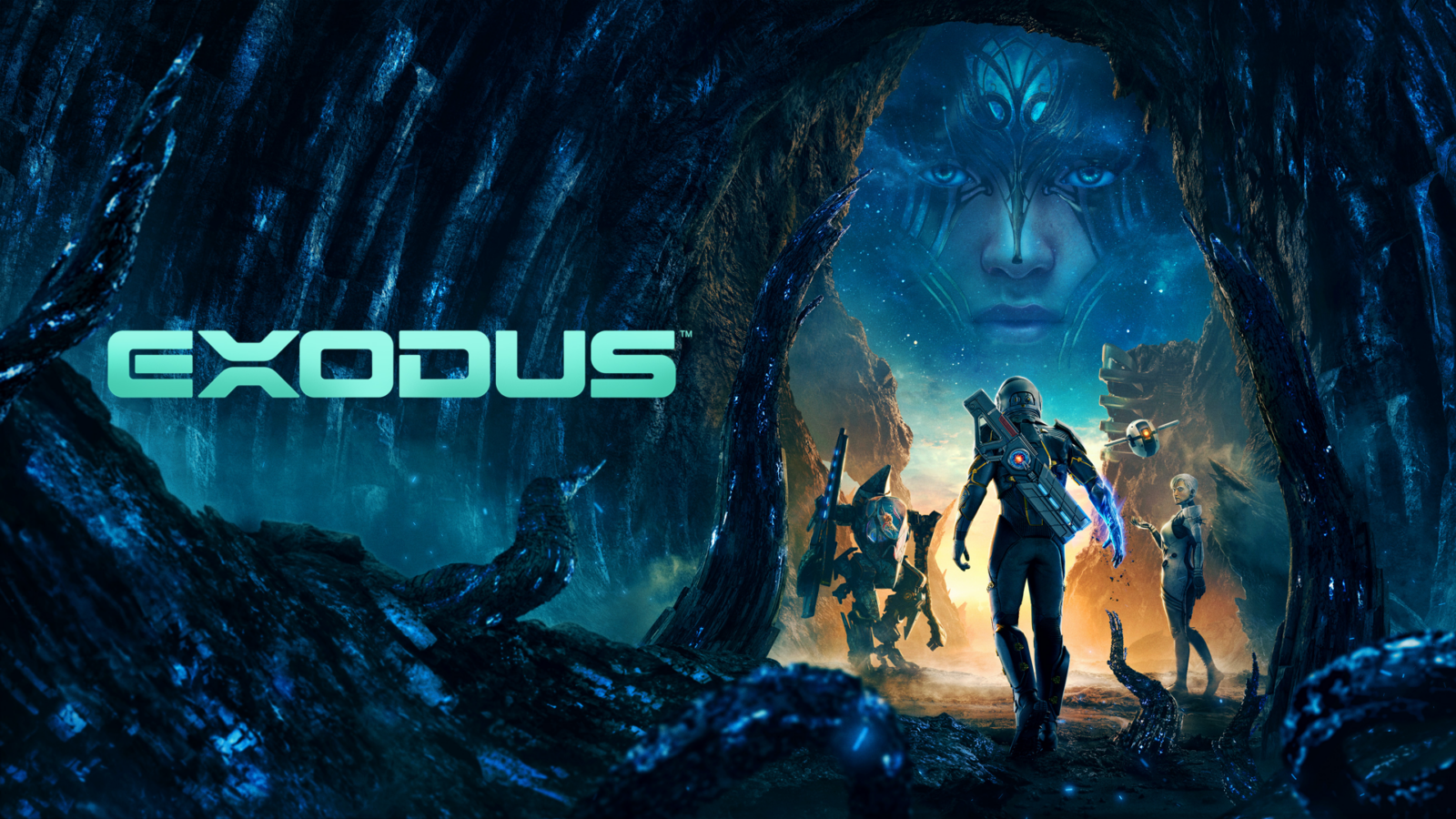
As I help free a talking frog the size of a small car – who also happens to be an engineer – from imprisonment, I find myself thinking, “Exodus is a lot… weirder than I expected.”
Simply the genre of this game had me excited – this is a true throwback to choice-based action-RPGs of the past; stuffed with morality systems, crunchy, synergistic abilities, mouthy companions and weighty combat. But it’s what I didn’t go in waiting to play that leaves me most intrigued – there’s a serious, galactic-scale, hard-sci storyline here, but it’s willing to go full ’70s cosmic freakout amid all that.
Exodus presents a universe with celestial powers, science-indistinguishable-from-magic locations and, yes, highly evolved, talking animals. It was around the time that one of my companions was screaming “There’s still time to negotiate!” into the face of a charging war-bear (who we’d upset by killing her human friend) that I realized, despite drawing on an established genre, quite how different Exodus is aiming to be.
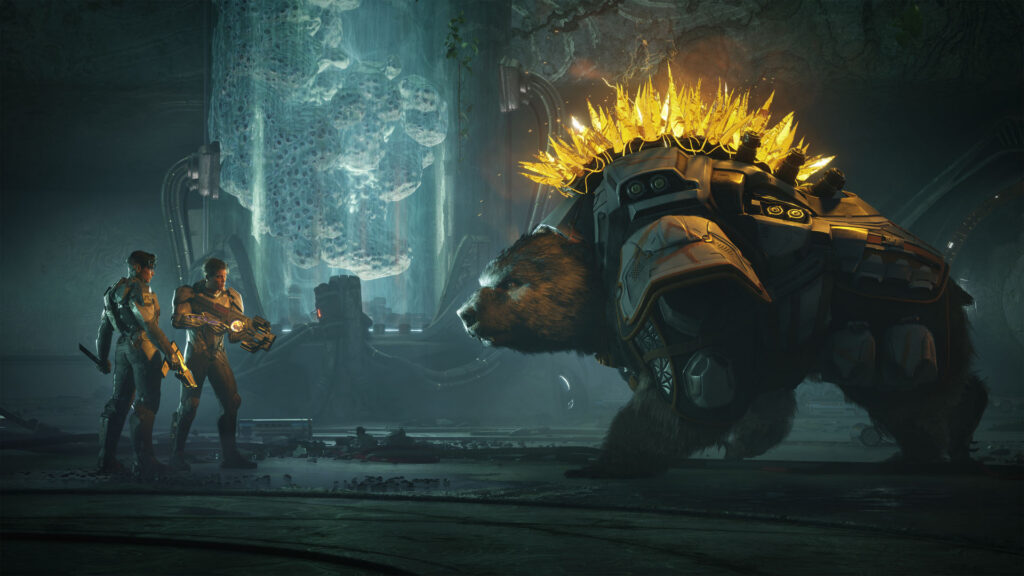
At gamescom 2026, I played a mission set several hours into the game – the game’s hero, Jun sets off on a rescue mission to save a space station (manned by hyper-intelligent frogs) from an invading force, alongside two of the game’s companions. Suliman is a reserved, slightly spiky individual, and Elise is a far more happy-go-lucky mercenary who tends to her combat duties in a combat-ready exosuit.
It’s an action-heavy slice of the game, and what struck me first was the weight and optionality of combat. Jun’s primary weapon is actually many weapons in one – the Recycler can shift form into anything from a burst-fire battle rifle to a shield-annihilating energy weapon, with the common thread being that it feels good to fire. This genre isn’t particularly known for its responsive gunplay, but the opening skirmishes – a tight mix of cover shooting and flashy ability use – were enough to convince me that this was anything but an afterthought in this game.
But beyond that, Jun can also use crafted or scavenge items like hovering, drone-like grenades, as well as an array of Celestial powers that act like cooldown timer spells in combat – letting me send eruptions of energy under enemy feet from the other side of the arena, or petrify enemies for my companions to deal with.
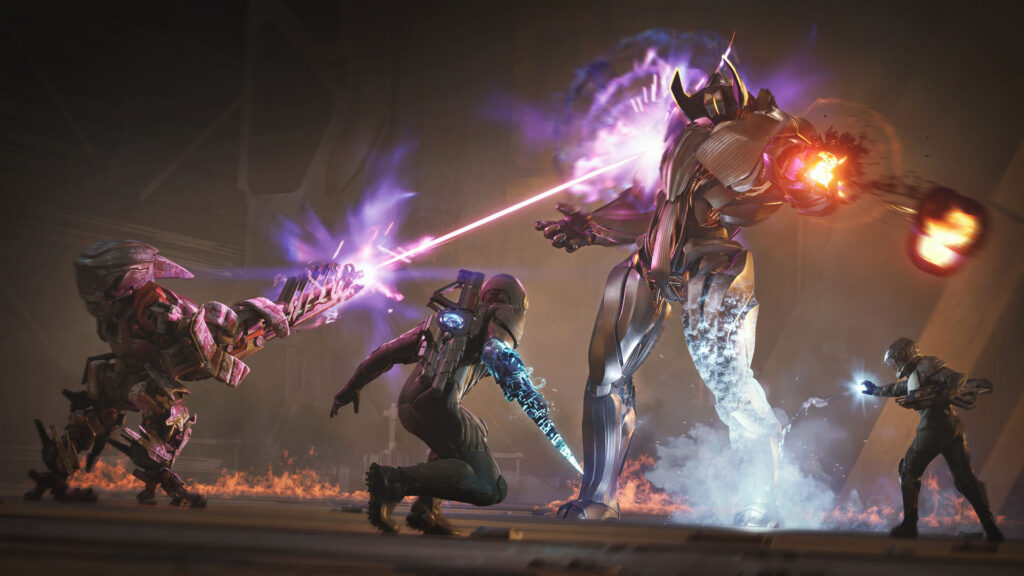
And speaking of those companions, Elise and Suliman also gave me a taste of how your chosen team can fundamentally alter how you choose to play. While your squad will fight autonomously, each comes with abilities that can be easily accessed and unleashed mid-fight, as well as “ultimate”-like attacks that can shift the course of a battle.
Suliman errs towards stealth, with the ability to phase behind enemies and take them down with melee, or to take down multiple enemies in a single attack. Elise, on the other hand, is far more noticeable, firing rocket salvos that can do massive area of effect damage.
It’s clear that these two companions have been chosen to provide a sense of how you can tailor your squad to your needs. While both were useful in any given situation, I found myself reflexively reaching for Suliman’s abilities before a full-scale fight broke out, letting me thin the ranks, and Elise during fights that had gotten out of hand, letting me retreat and take a breather. With the number of companions we know are going to be in this game, it’s clear that there’s as much a tactical reason to bring someone along as there is the classic “I want to be their friend!” element so familiar from the likes of Mass Effect.
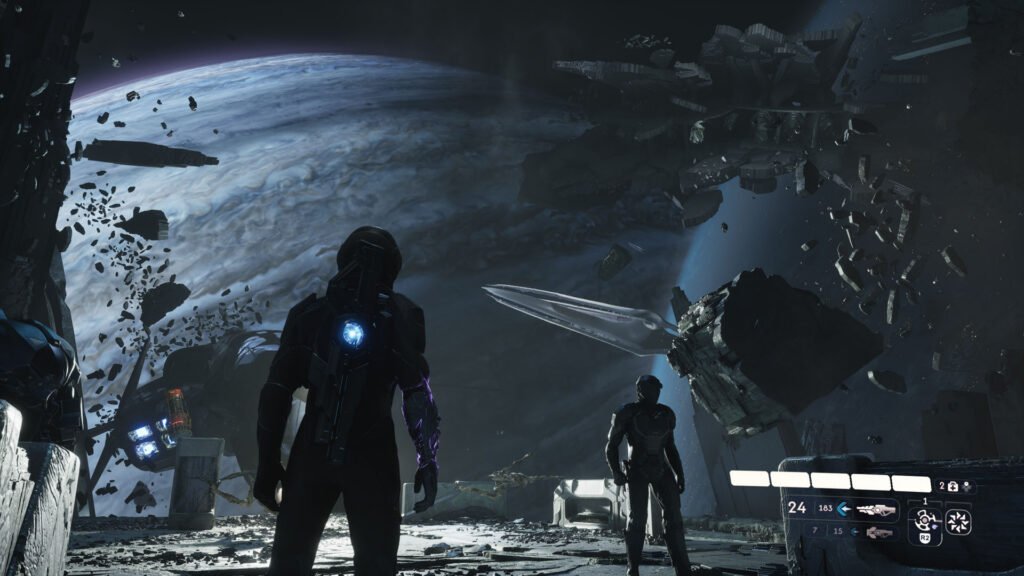
Another shift from the expected is this game’s take on morality – other games in the genre had already moved away from “good or evil” into something might be better termed as “individualist vs. egalitarian”, but Exodus goes even further towards letting you define the exact kind of personality you want Jun to have. Traveler Oaths subdivide the usually binary choice – here called Paladin and Immortal – into even more honed takes on your character’s personality. Adding even more complexity, your companions will react differently to different Oaths, meaning you’ll need to go some way to keep them onside while ploughing your own chosen path.
Everything from the above has clearly been chosen to deepen the action-adventure RPG genre – combat is more diverse and choice-oriented, companions are more specialized, morality is more rich and complex. And surrounding all this is that sense that if we can take a near-FTL trip to save a bunch of frogs, anything could happen – it might be coming in a familiar package, but Exodus is promising something truly new.
Exodus arrives for XBOX Series X|S and XBOX on PC on April 7, 2027. Play it on both console and PC at no additional cost with XBOX Play Anywhere.
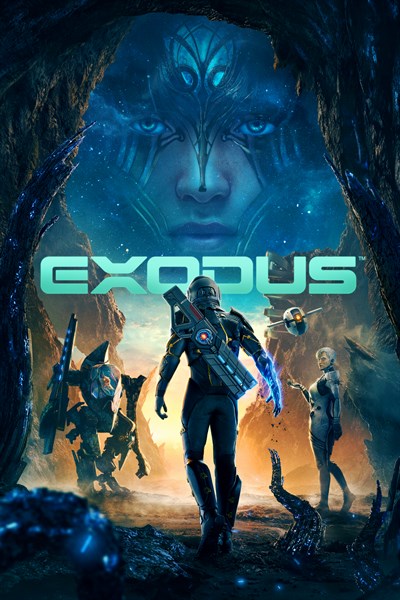

EXODUS
Wizards of the Coast